Who Are the 2026 Top Roofing and Siding Contractors?
Choosing among roofing and siding contractors takes more than scanning star ratings. A new roof protects your family, inventory, and daily routines. Siding shields walls from rain, wind, heat, and seasonal expansion. Strong contractors should show documented experience, trained crews, transparent estimates, and clear warranty terms. They should explain ventilation, flashing, drainage, and material compatibility without hiding behind technical language.
Mike Holmes, a respected Canadian contractor and renovation expert, often repeats his practical standard: “Make it right.” That short sentence guides this 2026 review. It means examining completed projects, installation details, customer communication, and responses when problems appear. We will consider licensing and insurance where applicable, manufacturer credentials, verified reviews, safety practices, and real project evidence. Clean flashing, straight siding lines, sealed penetrations, and protected landscaping can reveal more than polished advertising.
No ranking is flawless. Weather, local crews, and project complexity can change results. A contractor praised in one neighborhood may disappoint another. This uncertainty deserves attention. The guide treats “top” as a measured judgment, not a permanent label. It highlights companies combining reliable workmanship with honest explanations and accountable service. Readers should still request references, inspect contract terms, and compare site-specific proposals before signing. The best choice may not be the cheapest or most visible. It should be the contractor whose promises remain credible when the roof is opened and complications appear.
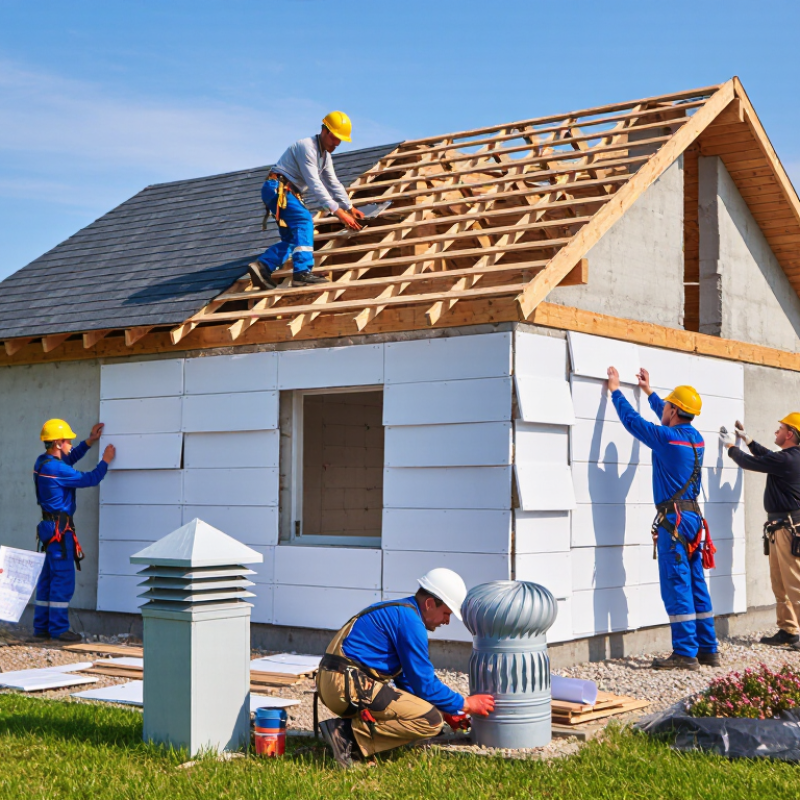
A top roofing and siding contractor in 2026 will be judged by evidence, not polished promises. The contractor should explain roof age, deck condition, flashing, ventilation, drainage, and siding moisture risks during a documented inspection. Photos matter. So does a written scope describing removal, materials, permits, cleanup, and warranty limits.
Safety is a measurable standard. The U.S. Bureau of Labor Statistics projects about 14,600 annual openings for roofers between 2023 and 2033. That demand makes workforce quality important. OSHA’s Census of Fatal Occupational Injuries recorded 395 construction fall deaths in 2022. A serious contractor therefore uses fall protection, site barriers, daily checks, and trained supervisors. Small details reveal habits.
Technical judgment separates strong contractors from fast installers. The National Roofing Contractors Association’s roofing guidelines emphasize proper flashing, underlayment, ventilation, and manufacturer-compliant installation. The Insurance Institute for Business & Home Safety also reports that wind and water resistance depend heavily on roof-edge details and sealed assemblies. A top contractor should connect these findings to the actual home, not recite them mechanically.
No checklist is perfect. I would still question an inspection that finds no hidden risks. Homeowners should compare itemized proposals, insurance certificates, references, and permit records. They should ask who performs the work, how changes are approved, and what happens after the first heavy storm. Experience is useful, but documented judgment is stronger.
Who Are the 2026 Top Roofing and Siding Contractors?
Key Standards for Evaluating Roofing and Siding Contractors
The strongest roofing and siding contractors earn trust through visible work, clear records, and consistent communication. Experience matters most when crews handle difficult details, such as roof valleys, chimney flashing, wall transitions, and uneven sheathing. Ask for recent project addresses, customer references, and dated photographs. A polished website is not enough.
Professional knowledge should appear in the inspection report. It should explain moisture damage, ventilation, insulation gaps, fastener placement, and drainage patterns. Contractors should follow current building requirements and published installation instructions. They should also provide proof of training, insurance, permits, and written warranties. Independent credentials add value, but they never replace careful workmanship.
Look closely at the estimate. It should list material grades, removal costs, protective barriers, cleanup duties, and payment stages. Vague language creates expensive confusion. Reliable contractors explain what happens if hidden rot appears beneath the siding. They measure twice and document changes with photographs.
Small details reveal character.
During site visits, notice whether workers protect flower beds, cover windows, and use magnetic tools around driveways. Ask how they control dust and daily debris. The best crews welcome technical questions without pressure. Still, no contractor is flawless. Even careful teams can miss a damaged nail flange or underestimate drying time. Their response matters more than an unrealistic promise of perfection. A dependable contractor admits uncertainty, corrects mistakes, and keeps the homeowner informed.
| Evaluation Dimension | What Should Be Verified | Evidence or Measurement | 2026 Screening Benchmark | Weight |
|---|---|---|---|---|
| Licensing and Legal Compliance | The contractor is legally authorized to perform the proposed roofing or siding work in the project jurisdiction. | Confirm the license number, classification, expiration date, disciplinary history, and permit eligibility through the applicable public licensing authority. | Required Current authorization with no unresolved disqualifying action. |
15 points |
| Insurance Protection | Coverage protects workers, occupants, neighboring property, and the client from project-related risks. | Obtain current certificates for general liability and workers’ compensation coverage; verify policy dates directly with the issuing insurer or agent. | Required Coverage must remain active for the full project period. |
12 points |
| Worker Safety Program | The contractor manages fall, ladder, scaffold, electrical, and material-handling hazards. | Review written safety procedures, training records, site inspections, incident reporting, and fall-protection equipment. | For construction work, fall protection is generally required at exposed edges 6 feet or more above a lower level under 29 CFR 1926.501. | 10 points |
| Roofing Scope Accuracy | The proposal clearly defines tear-off, deck inspection, underlayment, flashing, ventilation, disposal, and installation activities. | Compare the written scope with site conditions, measurements, photographs, material quantities, exclusions, and change-order procedures. | Required No major component should be described only as “standard installation.” |
14 points |
| Code and Weather Protection | The planned assembly addresses water, wind, snow, drainage, and local climate conditions. | Check the adopted building code, permit documents, flashing details, underlayment requirements, and climate-specific provisions. | Ice-barrier and flashing requirements vary by location; the proposal must follow the locally adopted code rather than a generic national template. | 12 points |
| Attic Ventilation and Moisture Control | The contractor evaluates intake and exhaust ventilation instead of replacing roofing without addressing moisture risks. | Require documented attic observations, vent-area calculations, and an explanation of how intake and exhaust ventilation will work together. | The International Residential Code commonly uses a 1:150 net-free-vent-area ratio, with a possible 1:300 option when specified conditions are met. | 8 points |
| Siding and Building-Envelope Detailing | The installation manages drainage, openings, transitions, trim, penetrations, and movement at the wall assembly. | Review wall preparation, flashing around windows and doors, water-resistive barrier integration, trim details, and clearance from grade or roofs. | Required Details must be shown for openings, corners, roof-to-wall intersections, and utility penetrations. |
10 points |
| Workmanship Controls | The contractor has a repeatable process for installation quality and correction of defects. | Inspect active or completed projects where permitted, review punch-list procedures, and identify the responsible quality-control person. | Written inspection checkpoints should cover substrate condition, flashing, fastening, alignment, ventilation, cleanup, and final water-shedding details. | 8 points |
| Warranty Transparency | The customer can distinguish workmanship coverage from product coverage and understand exclusions. | Review warranty duration, transferability, claim process, maintenance duties, excluded conditions, and the party responsible for each warranty. | Required All warranty terms must be supplied in writing before contract signing. |
6 points |
| Price and Contract Clarity | The price is comparable because quantities, labor, materials, taxes, disposal, permits, and contingencies are identified. | Compare at least three itemized proposals using the same scope; record allowances, exclusions, payment stages, and change-order rates. | Preferred Do not rank a proposal on price alone; unusually low bids require documented scope reconciliation. |
5 points |
The strongest 2026 contractors are defined by service depth, not advertising budgets. Inspection-led roofing teams document damaged underlayment, flashing, vents, and deck conditions before quoting. Their reports include photographs, moisture readings, and clear repair limits. That discipline reflects NRCA guidance on roof-system inspection and installation quality. It also reduces unpleasant surprises during replacement.
Exterior-envelope specialists offer more than siding installation. They check drainage, trim gaps, wall penetrations, and attic ventilation. Their crews understand how roofing and siding interact during heavy rain and temperature changes. The 2024 Cost vs. Value Report from Zonda found that fiber-cement siding recovered about 80% of project cost at resale. Asphalt roof replacement recovered roughly 57%. These figures are national averages, not promises. Local labor, design choices, and maintenance still matter. A polished truck proves little. I would ask for recent project photos and written warranty terms.
Tips: Request a line-item estimate. Confirm licensing and insurance. Ask who supervises the crew. Check whether old materials are removed completely. The best contractor should explain why a repair is sufficient. Replacement is not always the answer. That honesty can be difficult to measure, and I have sometimes underestimated its value. Review ventilation plans, flashing details, cleanup procedures, and payment schedules before work begins.
The 2026 top roofing and siding contractors should be compared by value, not sales claims. Material choice changes both installation cost and long-term maintenance. The 2024 Cost vs. Value industry report placed national asphalt-shingle replacement near $30,680. Its reported resale return was about 67.5%. Metal roofing cost roughly $49,928, but recovered only about 48.1%. Regional labor rates can change these figures sharply.
Siding comparisons reveal a different pattern. Fiber-cement siding averaged about $20,619 nationally in the same report. It recovered approximately 88.5% of its cost. Vinyl siding averaged about $17,516, with an estimated 80.2% return.
These figures are useful, not perfect. They do not measure storm exposure, repair frequency, or neighborhood design.
Warranty language deserves equal attention. The National Roofing Contractors Association advises homeowners to separate material warranties from workmanship warranties. A contractor may offer ten years of labor coverage, while the material warranty lasts longer. That difference matters after flashing fails or water reaches the attic. Ask who handles claims, whether maintenance is required, and what exclusions apply. Get every promise in writing. A low estimate may still be expensive when cleanup, ventilation, or rotten sheathing appears later. Real project experience suggests that detailed inspections usually beat attractive discounts.
Choosing a roofing and siding contractor in 2026 requires more than checking online ratings. A polished website proves very little. Ask how many similar projects the crew completed recently. Request proof of licensing, insurance, and local permits. A reliable contractor should explain these documents without hesitation.
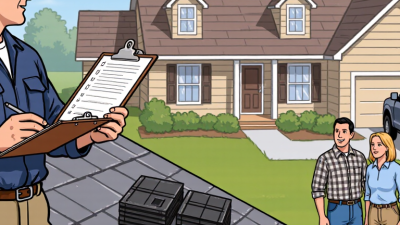
Walk around the property with the estimator. Look for cracked flashing, soft trim, lifted shingles, and siding gaps near windows. Ask how the crew will protect gutters, gardens, and outdoor furniture. The estimate should list materials, labor, ventilation work, cleanup, payment stages, and warranty terms. Vague language creates expensive surprises later.
Speak with at least two recent customers, not only older references. Ask whether workers arrived on schedule and handled unexpected damage fairly. I once trusted a low bid and missed a weak attic venting plan. The roof looked excellent, but summer heat exposed the mistake. That experience changed my questions.
Communication matters.
Choose a contractor who documents hidden damage with photos and explains possible cost changes before continuing. Good professionals measure moisture, inspect roof edges, and check siding alignment instead of rushing toward installation. They should also describe weather delays and safety procedures clearly. If the contractor pressures you to sign immediately, pause. A trustworthy choice should survive careful questions.
When comparing contractors, match their experience and warranty coverage to the expected service life of the material being installed. The chart uses the midpoint of commonly cited service-life ranges as a practical comparison benchmark, not as a guarantee.
Source: International Association of Certified Home Inspectors, Life Expectancy Chart. Actual durability depends on climate, installation quality, maintenance, ventilation, and product specifications.