10 Tips for Buying Windows and Siding Worldwide?

10 Tips for Buying Windows and Siding Worldwide?

Buying windows and siding worldwide requires more than comparing prices, colors, and online photographs. A product that performs well in Toronto may fail in coastal Singapore, where heat, humidity, salt, and heavy rain create different risks. Local climate, wall construction, installation practices, and replacement parts matter just as much as the advertised frame material.

The International Energy Agency reports that buildings consume about 30% of global final energy and produce roughly 26% of energy-related emissions. Windows influence this performance significantly. The U.S. Department of Energy estimates that heat gain and loss through windows represent 25% to 30% of residential heating and cooling energy use. These figures explain why glazing, air leakage, solar control, and installation deserve careful attention. Look for measurable data, such as U-values, solar heat gain coefficients, visible transmittance, and tested air-infiltration ratings. Labels are useful. They are not magic.

Siding also needs evidence. Examine impact resistance, moisture management, fire performance, ultraviolet stability, and warranty limitations. ISO 10077 provides calculation methods for the thermal performance of windows, doors, and shutters, while programs such as ENERGY STAR and NFRC offer recognized performance references in relevant markets. However, certification systems differ between countries, and some imported products may lack suitable local testing. That is an easy mistake to make. A dependable purchase plan should verify the manufacturer, installer experience, drainage details, delivery protection, and after-sales support. The following ten tips provide a practical framework, although no checklist can replace a qualified local assessment.
10 Tips for Buying Windows and Siding Worldwide?

Assess Your Climate, Building Needs, and Local Regulations

10 Tips for Buying Windows and Siding Worldwide?

Assess Your Climate, Building Needs, and Local Regulations

Climate should guide every window and siding decision. In a humid coastal town, salt air can corrode exposed hardware and weaken unsuitable fasteners. In cold regions, poorly insulated frames create condensation around the interior edges. Hot, sunny locations may need low solar heat gain and shaded glazing. Snow, wind, hail, and wildfire risks also influence material selection.

Building design matters just as much. Measure each opening, including uneven masonry and existing sill conditions. Check ventilation, emergency egress, daylight, sound control, and moisture management. A lower U-value can improve insulation, but it is not the only performance measure. Solar gain, air leakage, and installation quality can change real results. I once underestimated a small drainage gap; water later appeared beneath the interior trim. Small details matter.

Local rules can affect the entire purchase. Ask the municipal building office about permits, energy targets, fire separation, historic-area restrictions, and required product testing. Coastal or hurricane-prone regions may require documented impact or pressure resistance. Some jurisdictions also regulate visible colors, cladding profiles, and window opening sizes. Request written specifications, test reports, and installation details in the local language when possible. An experienced local surveyor or installer can identify requirements that online catalogs often miss. Independent advice costs money, but replacing noncompliant products costs more.

Compare Window and Siding Materials for Performance and Durability

Buying windows and siding worldwide requires more than comparing prices. Climate should guide the material choice. In humid coastal areas, corrosion resistance and sealed joints matter greatly. In cold regions, inspect the window’s U-value and air leakage rating. A lower U-value usually means better insulation. Solar heat gain also affects indoor comfort. Large south-facing windows may need a lower heat gain coefficient.

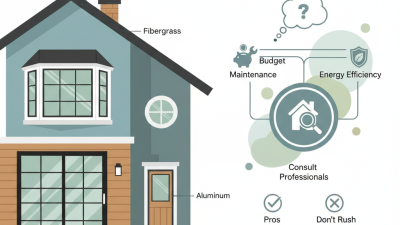
Window frames perform differently. Vinyl resists moisture and needs little maintenance, but extreme heat can cause movement. Fiberglass offers strong dimensional stability and suits wide temperature changes. Aluminum is durable and slim, yet it transfers heat unless it includes an effective thermal break. Wood feels warm and attractive, but it demands careful painting and moisture control. I once underestimated installation quality; even excellent glass performed poorly around a badly sealed frame.

Siding should be judged by water management, impact resistance, and repair needs. Fiber cement handles fire exposure and harsh weather well, but it is heavy and requires accurate cutting. Vinyl is lightweight and practical, though poor installation can create loose panels and trapped moisture. Metal siding resists insects and rot, but scratches may expose vulnerable areas. Engineered wood can look natural, yet its edges need protection from standing water. Ask for verified testing, drainage details, fastener guidance, and local warranty terms. Check corners and window interfaces closely. Small gaps become expensive problems. No material wins everywhere.

Verify Product Standards, Energy Ratings, and Manufacturer Credentials

10 Tips for Buying Windows and Siding Worldwide?

When buying windows or siding abroad, do not trust attractive photos alone. Check the product standard listed on the technical sheet. Requirements differ by country, climate, and building type. Ask for current test reports covering air leakage, water resistance, wind pressure, and structural strength. Look for clear laboratory details, test dates, and product identification. Vague certificates deserve careful questions.

Energy ratings need practical interpretation. Confirm the U-value, solar heat gain, visible light transmission, and air-tightness rating. Lower heat transfer may help in cold regions, while solar control matters in sunny areas. Compare the rating with your local climate, not only with sales claims. A highly rated window can still perform poorly after careless installation. Small gaps around the frame matter.

Check the manufacturer’s history and technical capacity. Request business registration details, warranty terms, installation guidance, and a traceable service contact. Review whether the warranty covers glass, coatings, hardware, and labor separately. Ask for references from projects with similar weather conditions. I once focused too heavily on laboratory figures and overlooked drainage details. That mistake changed my checklist. Credentials should be verifiable, current, and relevant to the product being purchased. Suppliers may provide impressive documents, but independent confirmation remains worthwhile.

Evaluate Pricing, Installation Services, and International Shipping

10 Tips for Buying Windows and Siding Worldwide
Tip 1: Compare complete pricing, not just the product price.
Ask for measurements, packaging, inland delivery, port fees, insurance, taxes, and installation costs. A low online quote can become expensive after arrival. Request an itemized invoice in one currency. Also confirm payment stages and refund conditions before ordering. Keep written records.
Tip 2: Check installation services carefully.
A qualified local installer should understand weather exposure, wall structure, drainage, and local building codes. Ask who handles incorrect measurements or damaged materials. Confirm whether the crew supplies flashing, sealants, fasteners, and finishing trims. These small items often change the final cost. Installation photos help, but they are not proof of skill.
Tip 3: Treat international shipping as a technical process.
Confirm crate dimensions, gross weight, delivery terms, expected transit time, and unloading equipment. Windows can arrive safely yet remain unusable if the opening sizes are wrong. Provide drawings with every measurement clearly marked. Recheck them. A second review may feel slow, but replacement shipping is usually worse.
For siding, compare coverage, moisture resistance, color stability, and maintenance requirements.
Ask whether samples represent the final finish under outdoor light. Warranty language also deserves careful reading, especially for cross-border claims. Some plans exclude installation errors or coastal conditions. I would not rely only on sales promises. Independent specifications and local professional advice are safer. One planning mistake remains common: choosing materials before checking the building envelope. That decision can create moisture problems later.

Review Warranties, Maintenance Requirements, and Long-Term Value

Buying windows and siding across borders requires more than comparing prices. Warranty language often changes by country, installer, and product category. Ask who handles claims, where replacement parts are stored, and whether labor is included. A ten-year material warranty may sound strong, but it can exclude fading, coastal corrosion, poor installation, or storm damage. Request the complete document before signing anything.

Maintenance requirements also affect daily costs. A window may need annual drainage checks, while siding might require gentle washing twice a year. Look closely at hinges, seals, fasteners, and lower wall sections where rainwater collects. In humid areas, inspect for trapped moisture and soft framing. In cold regions, check condensation around the glass during winter. Small problems become expensive when ignored.

Long-term value is not simply the lowest purchase price. Compare insulation performance, expected service life, cleaning time, repair access, and local labor rates. I once focused too heavily on energy ratings and overlooked difficult replacement hardware. That mistake made a supposedly efficient choice less convenient. Ask for maintenance records from similar installations, not just showroom samples. Keep invoices, photographs, and warranty contacts in one file. Also verify local building requirements, because a product suitable for one climate may perform poorly in another. Performance matters most after the first year.

10 Tips for Buying Windows and Siding Worldwide: Review Warranties, Maintenance Requirements, and Long-Term Value
Tip Buying Dimension Useful Data or Benchmark What to Check Before Purchase Long-Term Value Impact
1 Match performance to climate For cold climates, lower window U-values generally reduce heat loss. For hot climates, a lower solar heat-gain coefficient (SHGC) can reduce unwanted solar heat. Compare U-value, SHGC, visible transmittance, and air-leakage data using the same measurement system. Confirm whether values are reported in metric or imperial units. Better climate matching can lower heating or cooling demand and improve indoor comfort.
2 Verify the complete window system Glass, frame, spacer, seals, drainage, and installation all affect real-world performance. The center-of-glass value is not the same as the whole-window value. Request whole-window thermal and air-performance data, installation details, and confirmation that the product is suitable for the local exposure conditions. Whole-system data provides a more realistic basis for energy, condensation, and comfort decisions.
3 Read warranty coverage line by line Residential window and siding warranties commonly separate coverage for frames, glass, finishes, hardware, and labor. Coverage periods may differ substantially by component. Check the duration, exclusions, transferability, geographic limits, claim procedure, proof-of-purchase requirements, and whether labor or removal costs are included. A clear, transferable warranty can reduce future repair risk and support resale value.
4 Assess finish durability Exterior colors can fade or chalk under ultraviolet exposure, especially on dark surfaces and in high-sun locations. Coastal air can accelerate corrosion of unsuitable metals and fasteners. Ask for documented color-retention and corrosion-resistance information. Confirm suitability for coastal, tropical, desert, or high-altitude environments. A durable finish can reduce repainting, refinishing, and premature replacement costs.
5 Calculate maintenance requirements Many modern window and siding systems need periodic cleaning, sealant inspection, drainage-path checks, and hardware lubrication. Painted or stained materials usually require more frequent refinishing than factory-finished alternatives. Obtain a written maintenance schedule, recommended cleaning products, replacement-part availability, and instructions for inspecting joints, weep holes, and sealants. Lower routine maintenance reduces ownership time and recurring service expenses.
6 Check water and wind resistance Water penetration and wind-pressure ratings vary by design and test method. High-wind or storm-prone areas may require tested impact resistance, stronger anchorage, or additional certification. Compare tested design pressure, water-resistance results, impact classification where applicable, and local building-code requirements. Appropriate resistance helps limit moisture damage, drafts, and storm-related repair costs.
7 Compare siding life-cycle cost Purchase price is only one part of cost. Include installation, trim, underlayment, flashing, repainting or refinishing, cleaning, repairs, disposal, and expected replacement timing. Request an itemized quote and estimate total ownership cost over 10, 20, and 30 years using local labor and material prices. A moderately priced product may offer better value when maintenance and replacement costs are lower.
8 Confirm installation compatibility Improper flashing, inadequate shimming, poor sealing, and incorrect drainage can cause leaks or reduce thermal performance even when the product itself meets specifications. Use installers familiar with the local building envelope, request references, verify insurance and training, and require written installation instructions and inspection checkpoints. Correct installation protects both product performance and warranty eligibility.
9 Plan for replacement parts Common future-replacement items include insulated glass units, weatherstripping, screens, locks, rollers, hinges, trim, and matching siding panels. Ask how long parts will be available, whether components are standardized, how international orders are handled, and what shipping or customs costs may apply. Accessible parts can extend service life and prevent replacement of otherwise sound windows or siding.
10 Evaluate documented service life Actual life depends on climate, exposure, materials, installation, and maintenance. Warranty length is not a guaranteed service-life promise. Review independent test reports, published material specifications, completed-project references, and the expected replacement cycle for each component. Evidence-based service-life estimates improve budgeting and reduce the risk of premature replacement.
Note: Performance ratings, warranty terms, building codes, energy prices, labor costs, and maintenance intervals vary by country and project. Always compare products tested to the same standard and confirm requirements with the local authority or a qualified building professional.

Request Your FREE Quote